Buying A Horse Property In Cave Creek: Key Considerations
June 18, 2026
June 18, 2026
Wondering whether a Cave Creek horse property is truly set up for the way you want to live and ride? That question matters more than many buyers realize. A property can look perfect at first glance, but zoning, access, utilities, and buildable space can change what is actually possible once you own it. If you are thinking about buying in Cave Creek, this guide will help you focus on the details that matter most. Let’s dive in.
Cave Creek has long drawn buyers who want more room, rural character, and access to outdoor riding. The town maintains multi-use trails that connect parts of Cave Creek to Cave Creek Regional Park, Spur Cross Ranch Conservation Area, the Tonto National Forest, the Maricopa Trail, and Desert Foothills Land Trust properties.
That trail network is a major advantage, but it is not something to assume. The Town notes that some trail segments are primitive or unsigned, so a nearby trail on a map may not feel simple or direct in everyday use. For horse buyers, that means location should be evaluated based on actual access, not just broad proximity.
In Cave Creek, zoning is one of the first things to confirm. The Town’s buyer notice says many residential areas are in Desert Rural, or DR, zones. In those areas, ranching and the possession of horses or other livestock is a right for owners with at least two contiguous acres in a DR zone.
That two-acre threshold is important, but acreage alone does not tell the whole story. The zoning ordinance distinguishes between private ranch use and commercial ranch use, and the rules are not the same.
For DR-zoned land, private ranch use requires at least two contiguous acres under single ownership. The ordinance specifically permits uses such as boarding, breeding, equine training, equine lessons, and the sale of ranch animals as private ranch uses.
Commercial ranches require at least five contiguous acres and are subject to added siting and operations rules. These can include activities like polo fields and scheduled public or club riding events. If you plan to do anything beyond personal or limited private ranch use, this distinction matters early in your search.
Some horse properties may have uses that predate the current zoning ordinance. The Town says these may qualify as legal nonconforming uses. However, if the Town does not already have a record of that use, the owner must provide written, notarized third-party documentation showing it was legally established before the current ordinance.
That can affect barns, boarding setups, or other improvements that seem established but may not fit current rules. If a listing mentions a long-standing horse use, it is wise to verify how that use is documented.
A Cave Creek mailing address does not always mean the parcel is inside the Town of Cave Creek. The Town states that the 85331 ZIP code also includes Carefree, Phoenix, Scottsdale, and unincorporated Maricopa County.
That matters because zoning, permitting, and other development rules can change based on the actual jurisdiction. Before you rely on any assumption about horses, barns, or access, confirm where the parcel is located and which rules apply.
Even if zoning supports horse use, private restrictions can still limit what you can do. The Town makes clear that its review of CC&Rs does not mean approval of those private restrictions.
In practical terms, that means you should review recorded CC&Rs, deed restrictions, and any HOA rules separately. These documents may affect horses, trailers, fencing, barn placement, or boarding activities.
One of the biggest mistakes buyers make is assuming that a large lot automatically works for horses. In Cave Creek, lot shape, setbacks, disturbance limits, driveways, and septic placement can all reduce the usable footprint.
The zoning code limits total lot coverage and land disturbance in DR zones. It also counts accessory uses, driveways, and septic systems in that disturbance calculation. So a parcel that looks generous on paper may still have a tighter-than-expected buildable area for an arena, turnout, trailer parking, or a new barn.
In DR zones, the ordinance allows detached accessory living quarters, corrals, barns, horse shades, and other private ranch uses that are incidental to the main residential use. But buyers should know that zoning clearance is required in addition to necessary building permits before establishing accessory buildings or accessory uses.
The same goes for fences, walls, and gates. The Town says these cannot be built without zoning clearance first. If you are planning improvements after closing, this should be part of your early due diligence.
Horse property access is not just about reaching the home in a car. It is also about whether a horse trailer, hay delivery, service vehicle, or emergency vehicle can get in and out without trouble.
Cave Creek notes that private roads are common, and many are not Town-maintained. The Town’s Code of the West also warns that roads, trails, and washes can become impassable in extreme weather. If access crosses another parcel, legal easements should be confirmed.
If a property depends on a long private drive, layout matters. Cave Creek’s transportation design guidance calls for a minimum 20-foot unobstructed width, 14-foot vertical clearance, a 45-foot centerline turning radius, passing points on long drives, and a turnaround for dead-end private access roads over 200 feet.
These details can make a real difference when you are hauling horses or arranging deliveries. A beautiful rural driveway is only an asset if it functions well in daily use.
Trail access is one of the most appealing parts of owning a horse property in Cave Creek. The Town maintains multi-use trails for hiking, biking, and horseback riding, and it states that horses have the right-of-way on trails.
Nearby public riding options also add value. Maricopa County says Cave Creek Regional Park offers more than 11 miles of trails and a horse staging area, while Spur Cross Ranch Conservation Area offers more than 12 miles of trails and also has a horse staging area. The Maricopa Trail adds a countywide nonmotorized trail system of more than 300 miles that includes equestrian use.
Some access questions require extra care. The Town says the Arizona State Land Department controls access to state trust land, and a valid current permit is required to legally access those informal hiking and equestrian trails.
This is an easy detail to miss when a property appears close to open land. Before you buy, confirm whether a trail connection is public, private, or dependent on a permit.
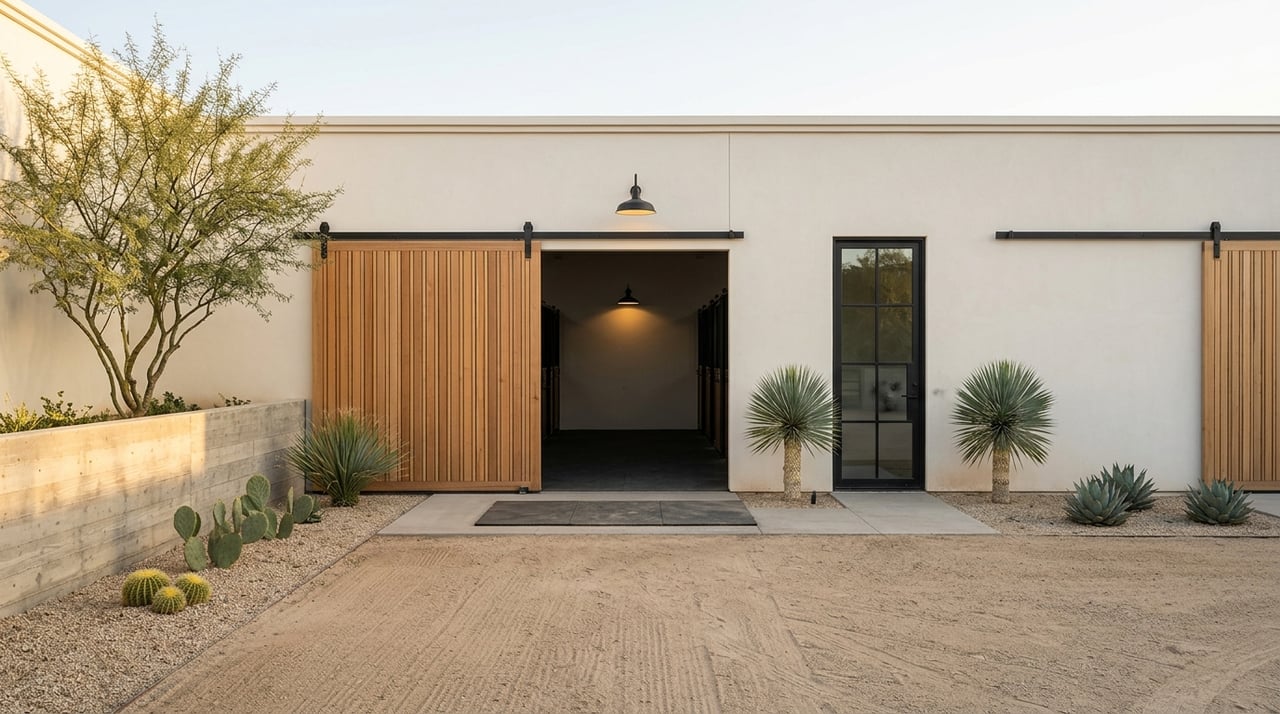
If you are buying with the goal of creating or upgrading an equestrian setup, site planning should start before you make an offer. The placement of barns, turnout, corrals, and storage areas needs to fit the lot and comply with local rules.
For more intensive equestrian operations, Cave Creek requires livestock structures, containment areas, and facilities used for stabling, storing, showing, or training to comply with yard setbacks. The Town also requires turnout areas and pens to be fenced.
Manure storage must be at least 60 feet from all property lines. For parking, on-site unpaved parking is preferred, and parking cannot be placed in the public right-of-way.
Lighting is another detail that buyers sometimes overlook. Cave Creek regulates lighting for corrals, stables, arenas, exercise areas, paddocks, and barns, including shielding and photometric review during permitting. If evening riding or barn lighting is part of your plan, that should be reviewed early.
There is one helpful detail for many buyers. Cave Creek says horse trailers are considered an accessory use in DR zones, so they are not subject to the general trailer-storage restriction.
That does not remove the need to think about layout and circulation, but it can make day-to-day storage more straightforward on the right property.
Utilities can be a major deciding factor on rural horse properties. Cave Creek’s buyer notice states that sewer service is not available in all areas, and where sewer exists, connection may be mandatory.
If sewer is unavailable, a property may need an individual sewage disposal system. Maricopa County says new septic systems, septic alterations, and remodels on septic-served homes require county review and approval.
For water, Cave Creek says well permits come from the Arizona Department of Water Resources. ADWR regulates all groundwater wells in Arizona and requires a Notice of Intent to Drill before a new well is drilled or an existing well is deepened or modified.
Maricopa County also notes that private domestic well owners are responsible for their wells’ safety and may need independent testing. If a property depends on a private well, you will want to confirm both permitting and condition during due diligence.
Desert properties can still face serious drainage issues. Maricopa County Flood Control says flood hazards occur during monsoon and winter rainstorms.
The county’s floodplain information resources allow buyers to check designated floodplains, request determinations, and understand whether lenders may require flood insurance. The county also warns that flood hazards can exist even where they have not yet been formally documented.
For horse property buyers, this affects more than insurance. Floodplain and drainage conditions can influence where you place a barn, whether an access road stays usable, and how turnout or arena areas perform after storms.
Before you move forward on a horse property in Cave Creek, it helps to ask a focused set of questions:
Buying a horse property in Cave Creek is about much more than finding a home with acreage. The right purchase depends on zoning, legal use, trailer-friendly access, utility infrastructure, flood awareness, and a realistic buildable footprint.
When you evaluate these details early, you can avoid surprises and focus on properties that truly fit your goals. If you want experienced local guidance as you search for the right equestrian property in Cave Creek, connect with Peggy Sala for a personalized consultation.
Stay up to date on the latest real estate trends.

With over 30 years of expertise, we can advise and guide you with one of your most valuable assets. Over 80% of our work comes from repeat clients and referrals, proof of our dedication. We bring the perfect blend of seasoned expertise and fresh energy. A great agent helps, but a great team makes all the difference. Contact us for a consultation! We make this easy for you!

14635 N Kierland Blvd Ste 160 Scottsdale AZ 85254