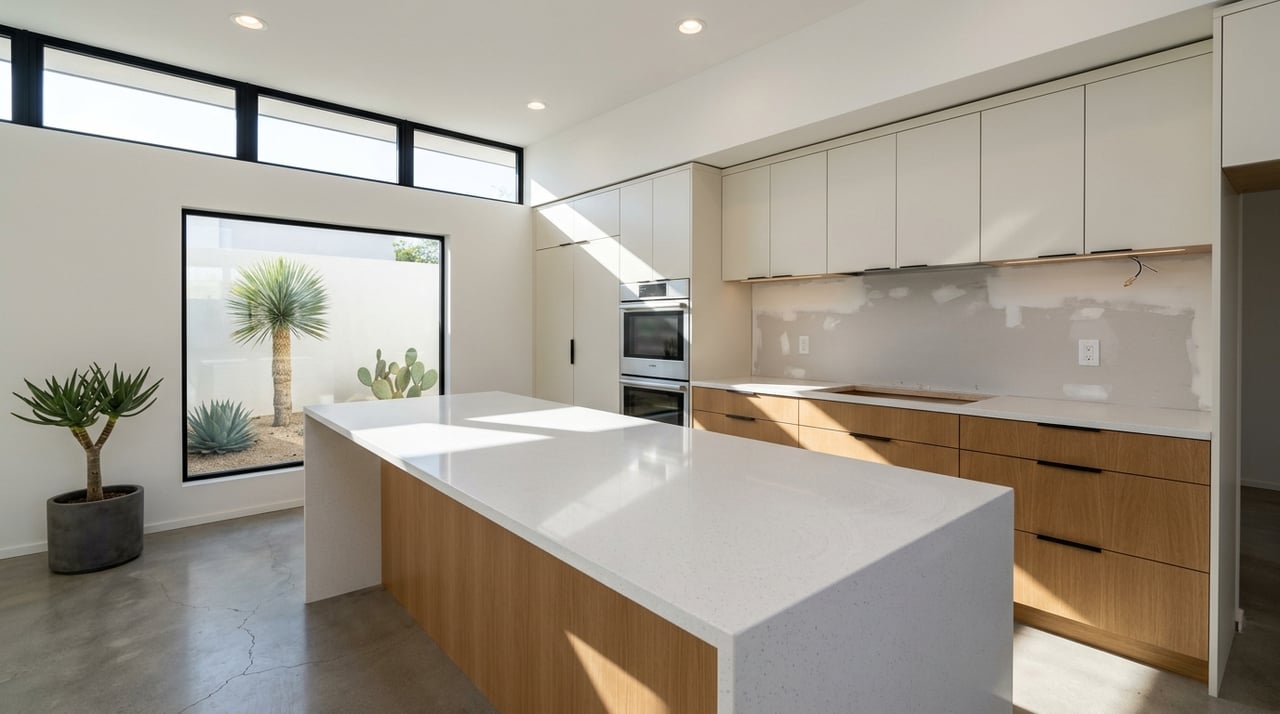
Is a Mesa Fixer Upper Investment Right for You?
April 16, 2026
April 16, 2026
Thinking about buying a fixer-upper in Mesa? The lower sticker price can look appealing, especially if you are hoping to build equity or create a home that fits your needs. But in a market where inventory is active and pricing still sits in the mid-$400,000s, the real question is not whether a property looks like a deal, but whether the numbers, timeline, and repair scope truly work for you. Let’s dive in.
Mesa is a large and established housing market with 517,151 residents and a 64.4% owner-occupied housing rate, according to U.S. Census QuickFacts. The same source reports a median owner-occupied home value of $408,000 and a median gross rent of $1,620 for 2020 through 2024.
More recent market trackers show Mesa home prices in the mid-$400,000s. Redfin’s Mesa housing market data reported a $469,000 median sale price in February 2026 and 62 median days on market, while Realtor.com data cited in the research report showed a $459,900 median listing price, 3,467 active listings, and 46 median days on market in March 2026.
That matters because Mesa appears active, but not overheated. Redfin describes the market as somewhat competitive, with homes selling for about 97.7% of list price and 31% of listings seeing price drops. For you, that can mean some room to negotiate, but not enough room to ignore renovation costs or assume every fixer-upper will become a smart investment.
A fixer-upper can make sense when you have a clear plan and enough flexibility to handle surprises. In Mesa, the opportunity is often less about finding the cheapest home and more about finding a property where the repairs are manageable, the timeline is realistic, and the after-repair value supports your goals.
In simple terms, a fixer-upper may be a fit if you:
If those points feel stressful instead of exciting, a turnkey home may be the better choice.
Before you think about finishes or layout ideas, focus on the property’s condition. The American Society of Home Inspectors explains that a home inspection is an objective visual exam of accessible systems and components, usually taking 2 to 4 hours, with a report often delivered within 24 to 48 hours.
That inspection commonly covers the roof, HVAC, plumbing, electrical, insulation, windows, and foundation. Just as important, ASHI notes that an inspector does not pass or fail the home, determine market value, or verify local code compliance. For a fixer-upper, that means the inspection is a starting point, not the final answer.
After the inspection, written contractor bids become essential. The Federal Trade Commission advises getting multiple estimates and says a written estimate should include the work to be done, materials, completion date, and price.
This is one of the smartest ways to pressure-test a deal. A house that seems affordable at first glance can quickly become much more expensive when you uncover missing scope, delayed timelines, or repairs that were not obvious during the walkthrough.
If you are considering a Mesa fixer-upper, this order can help you stay grounded:
That process can help you make a decision based on facts, not emotion.
One of the biggest mistakes fixer-upper buyers make is underestimating permitting. In Mesa, some projects move quickly because they are mostly cosmetic. Others take longer because they require review before work can begin.
According to the City of Mesa residential construction guidelines, permits are required for:
Mesa also notes that permits are not typically required for painting, countertop replacement, or flooring replacement. That distinction matters. A mostly cosmetic remodel may be more predictable, while a deeper rehab can add review time, paperwork, and extra carrying costs.
The City of Mesa says written comments or approval are typically issued within 10 working days, with a 5-working-day expedited option available for an added fee. If revisions are required, second and third reviews can follow the same timeline, and permits remain valid for 180 days after issuance.
For you, that means a renovation timeline should account for more than labor and materials. City review, contractor scheduling, and revisions can all affect how long the project takes before the property is ready to occupy, rent, or resell.
Condition is only part of the equation. The property’s location can also affect what you are allowed to do with it.
The City of Mesa advises buyers to contact Planning before starting work to confirm whether a project is allowed in the zoning area or whether additional approval is needed. The city also states that if a property is in a flood zone, approval from the Maricopa County Flood Control District is required before applying for a Mesa construction permit.
That is especially important if you are considering:
If your investment strategy depends on changes that are not straightforward to approve, the deal may not be as attractive as it first appears.
When you are renovating, who does the work matters just as much as what work is needed. The Arizona Registrar of Contractors says any business that contracts or offers to build, alter, repair, improve, move, wreck, or demolish a structure must be licensed.
That is not just a box to check. Unlicensed work can create problems with permits, resale, insurance, and warranty claims later. If you are buying a Mesa fixer-upper, using properly licensed contractors can help protect both your timeline and your long-term investment.
For some buyers, a fixer-upper creates opportunity. For others, it creates risk and fatigue. The better option depends on your goals, your cash position, and how much uncertainty you are willing to manage.
Here is a simple comparison:
| Option | Best For | Main Advantage | Main Tradeoff |
|---|---|---|---|
| Fixer-upper | Buyers with a clear renovation plan and reserves | Potential to create value through updates | More complexity, time, and cost risk |
| Turnkey home | Buyers who want speed and predictability | Move-in convenience and fewer surprises | Less upside from renovation |
This tradeoff is especially relevant in Mesa. Prices remain in the mid-$400,000s, and rent estimates vary by source and timeframe. The Census reports median gross rent of $1,620, while the research report cites Realtor.com’s March 2026 median rent figure of $1,456 per month. That kind of variation is another reminder to run the numbers carefully rather than rely on broad assumptions.
If paying cash for repairs is not realistic, renovation financing may make a fixer-upper more feasible. According to HUD’s 203(k) program overview, eligible buyers may be able to finance both the purchase or refinance and the rehabilitation of a home that is at least one year old.
The research report also notes that Fannie Mae’s HomeStyle Renovation mortgage combines purchase or refinance with renovation financing in one loan. HUD advises working with HUD-approved Title 1 or 203(k) lenders to help avoid fraud and inflated estimates.
These programs can open doors, but they also add documentation and timing complexity. Compared with a standard purchase of a move-in-ready home, a financed fixer-upper usually requires more planning, more coordination, and more patience.
Before you move forward on a Mesa fixer-upper, ask yourself:
If you can answer those questions confidently, a fixer-upper may be worth pursuing. If not, you may be better served by a home that offers more certainty from day one.
In Mesa, a fixer-upper can be a smart investment when the numbers are grounded in inspection findings, written contractor bids, realistic permit timelines, and a clear plan for financing and execution. It is usually not about finding the lowest list price. It is about making sure the full cost of ownership and renovation still supports your goals.
If you want help comparing fixer-uppers to turnkey options in Mesa, or you need a trusted local guide to help you evaluate risk, timeline, and resale potential, connect with Peggy Sala. You will get experienced, hands-on support tailored to your next move.
Stay up to date on the latest real estate trends.

With over 30 years of expertise, we can advise and guide you with one of your most valuable assets. Over 80% of our work comes from repeat clients and referrals, proof of our dedication. We bring the perfect blend of seasoned expertise and fresh energy. A great agent helps, but a great team makes all the difference. Contact us for a consultation! We make this easy for you!

14635 N Kierland Blvd Ste 160 Scottsdale AZ 85254